
What is a Computer? A Complete Beginner’s Guide
In today’s digital world, computers are everywhere — in schools, offices, hospitals, homes, and even in our pockets. But have you ever stopped to ask: what is a computer, really? Understanding computers is the first step toward building digital skills that are essential for modern careers and education.
In this detailed guide, we’ll explain what a computer is, how it works, its components, types, uses, and why learning computer basics is important in today’s world.
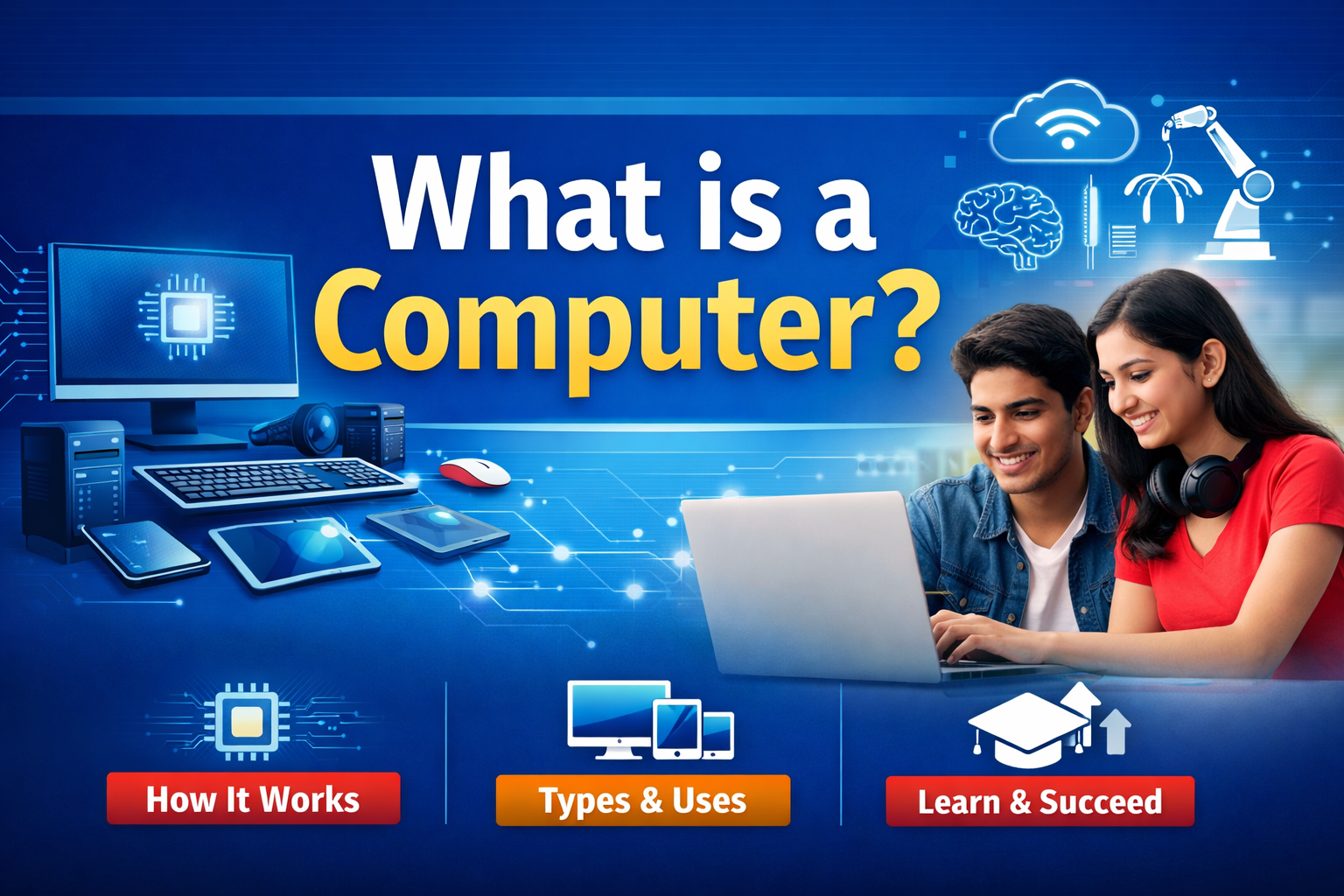
What is a Computer?
A computer is an electronic machine that accepts data, processes it according to instructions, stores it, and produces meaningful output.
In simple words:
A computer is a smart machine that helps us perform tasks faster, more accurately, and efficiently.
It can solve calculations, create documents, browse the internet, design graphics, run software, and even control other machines.
Basic Functions of a Computer
Every computer works using four main functions:
1. Input
This is the process of entering data into the computer.
Examples:
- Keyboard typing
- Mouse clicking
- Touchscreen input
- Voice commands
2. Processing
The computer processes the data using instructions given by software and programs.
3. Storage
The computer stores information for future use. Data can be stored temporarily or permanently.
4. Output
This is the result shown to the user.
Examples:
- Monitor display
- Printed documents
- Audio output
- Digital files
Main Components of a Computer
A computer system has two major parts:
Hardware
Hardware refers to the physical parts of a computer that you can see and touch.
Key hardware components include:
- Monitor – Displays visual output
- Keyboard – Used for typing
- Mouse – Controls the pointer
- CPU (Central Processing Unit) – The brain of the computer
- RAM – Temporary memory
- Hard Drive / SSD – Permanent storage
Software
Software refers to programs and applications that tell the computer what to do.
Types of software include:
- Operating System (Windows, Linux, macOS)
- Application Software (MS Word, Excel, browsers)
- Utility Programs (antivirus, cleaners)
How Does a Computer Work?
A computer works through a cycle called the IPO cycle:
Input → Process → Output
Example:
You type numbers into a calculator app → the computer processes the calculation → it shows the answer on the screen.
This process happens in milliseconds, making computers incredibly fast and reliable.
Types of Computers
Computers come in many forms depending on size, power, and purpose.
Desktop Computers
Used in offices, schools, and homes. They are powerful and suitable for long work sessions.
Laptops
Portable computers that can be carried anywhere.
Tablets
Touchscreen-based lightweight devices.
Smartphones
Mini computers that fit in your pocket.
Supercomputers
Extremely powerful machines used for scientific research, weather prediction, and space exploration.
Uses of Computers in Daily Life
Computers are essential in nearly every field:
Education
- Online classes
- Research
- Assignments
- Digital learning tools
Business
- Accounting
- Communication
- Data management
- Marketing
Healthcare
- Patient records
- Medical imaging
- Research
Entertainment
- Gaming
- Movies
- Music
- Social media
Government & Banking
- Secure transactions
- Record keeping
- Online services
Importance of Learning Computers
Learning computer skills is no longer optional — it is a necessity.
Benefits include:
- Better career opportunities
- Faster communication
- Increased productivity
- Access to global information
- Digital literacy and confidence
Computer knowledge helps students and professionals stay competitive in the modern world.
Future of Computers
The future of computers includes exciting developments like:
- Artificial Intelligence
- Robotics
- Cloud Computing
- Virtual Reality
- Smart Automation
As technology evolves, computer skills will become even more valuable.
A computer is more than just a machine — it is a powerful tool that shapes modern life. From education to business and entertainment, computers help us work smarter and live more efficiently.
Understanding the basics of computers is the foundation for success in the digital age. Whether you are a student, professional, or beginner, learning computer skills opens doors to endless opportunities.
Digital Marketing Course Introduction
In today’s hyper-connected economy, a “Digital Presence” is no longer optional—it is the backbone of every successful business. As traditional…
Digital Marketing Course
In today’s digital world, every business needs a strong online presence. From social media marketing to search engine visibility, companies…
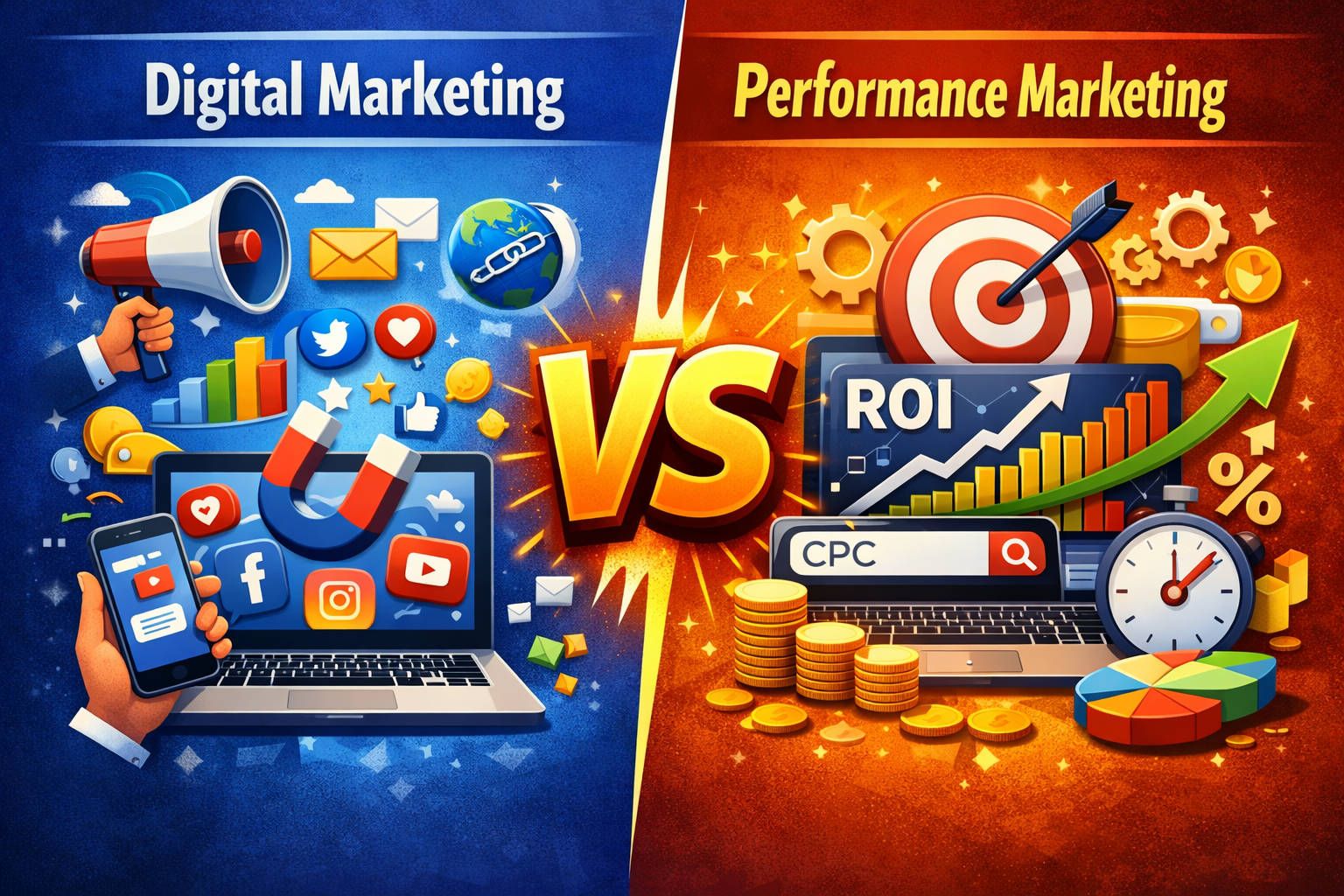
Digital Marketing vs Performance Marketing
Kya Aap Sirf Post Karte Ho — Ya Results Bhi Laate Ho? Digital Marketing awareness deta hai. Performance Marketing revenue….